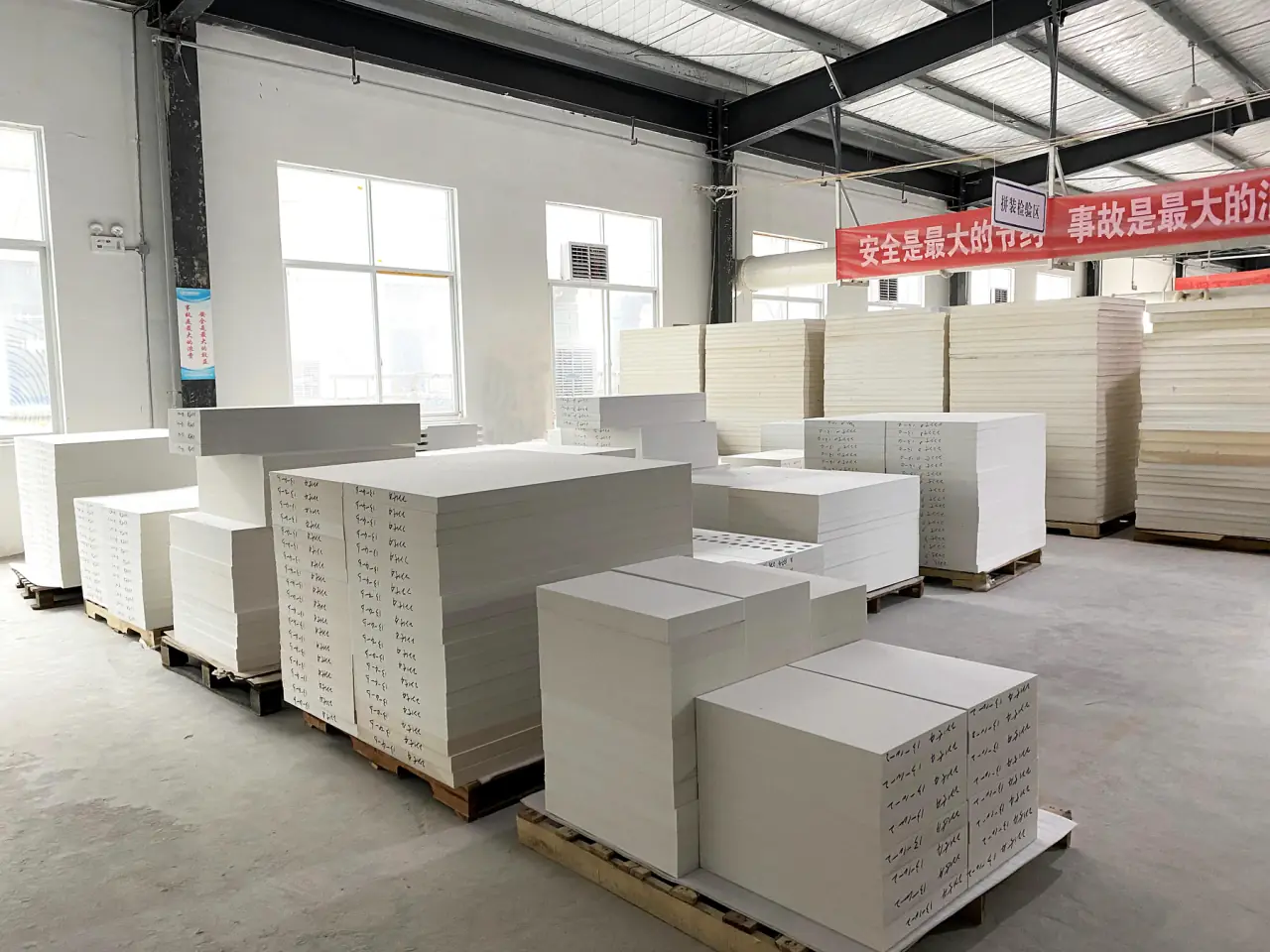
Stacks of ceramic fiber board in the production workshop

01Ceramic fiber materials

Ceramic fiber insulation materials

Ceramic fiber board, blanket, paper, modules and custom shapes in grades from 1260 to 1900.

7material grades
Customthickness and density
5product forms

02Overview

Choose the ceramic-fiber form from the installed function, not temperature grade alone. Board provides a rigid, machinable barrier; blanket accommodates curved surfaces, layered linings and compression joints; paper provides thin separation, gasket and heat-shield formats; modules create compressed lining systems; vacuum-formed shapes reproduce drawing-based bores, grooves and interfaces. Normal and peak temperature, atmosphere, exposed face, available thickness, mechanical loading, density, installation method and replacement access complete the specification.

03Product families

Board, blanket, paper, modules and vacuum-formed ceramic fiber parts.

The range covers 1260–1900 grades, with the available density, dimensions and finishing options listed for each product. Choose the form by rigidity, installed thickness, fastening method and required geometry.

04Selection table

Board, blanket, paper, module or formed shape?

Temperature grade is only one decision. The material must also suit the required rigidity, available thickness, installation method, compression and part geometry.

RequirementRecommended productTypical fitKey RFQ input
Rigid flat insulationBoardLinings, barriers, baffles and machined profilesGrade, L × W × T, density, machining
Flexible thick insulationBlanketLayered linings, wraps, doors and expansion areasGrade, density, width, thickness, roll length
Thin flexible insulationPaperGaskets, separators and tight clearancesThickness, width, die-cut drawing
Fast large-area liningModuleFurnace walls, roofs and doorsModule size, compression, anchor, orientation
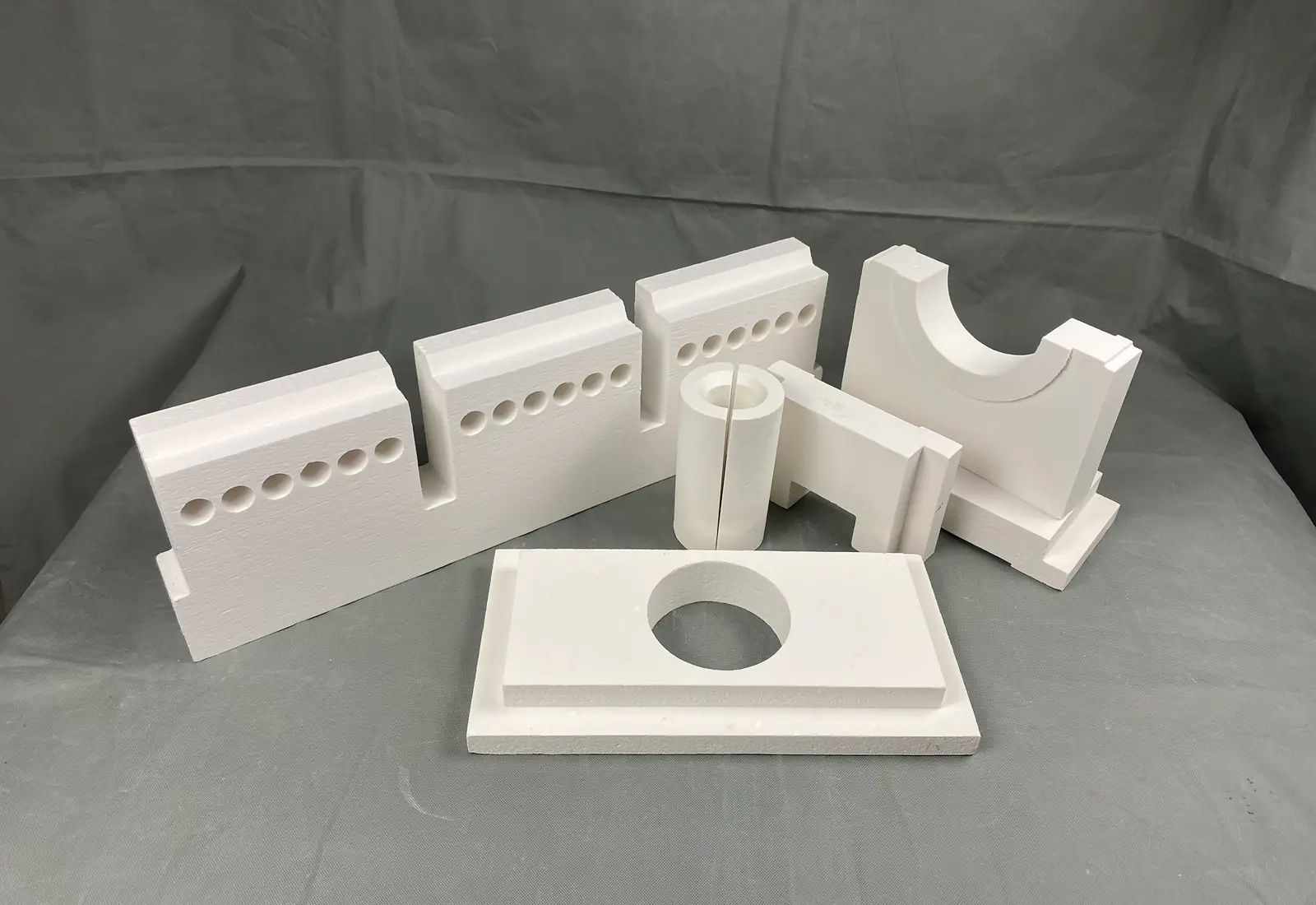
Complex one-piece geometryVacuum-formed shapeBurner blocks, sleeves, ports and supportsDrawing, tolerance, surface treatment

05From requirement to quotation

Match material form, grade and processing to the installation position.

  1. 01

    Temperature and atmosphere

    Confirm normal and peak conditions before selecting the grade.

  2. 02

    Form and geometry

    Choose rigidity, thickness, compression and installation method.

  3. 03

    Conversion and packing

    Confirm cutting, machining, anchors, die cutting and export packaging.

06Product center FAQ

Common questions before selection.

01Can density be customized?+

Yes. Normal density varies by grade and product construction, and special-density production is available for defined applications.

02Can materials be cut or machined before delivery?+

Yes. Cutting, profiling, drilling, CNC machining and die cutting are available for suitable product forms.

03What is the maximum temperature for 1900 grade material?+

The maximum service temperature is up to 1800°C. Product form, atmosphere and the heating cycle must also be considered when selecting the construction.

08Product quotation

Request pricing for ceramic fiber insulation materials.

Send the product dimensions, operating temperature and quantity. For a heated assembly, add the available voltage and power; a drawing or sample photo can help define the rest.