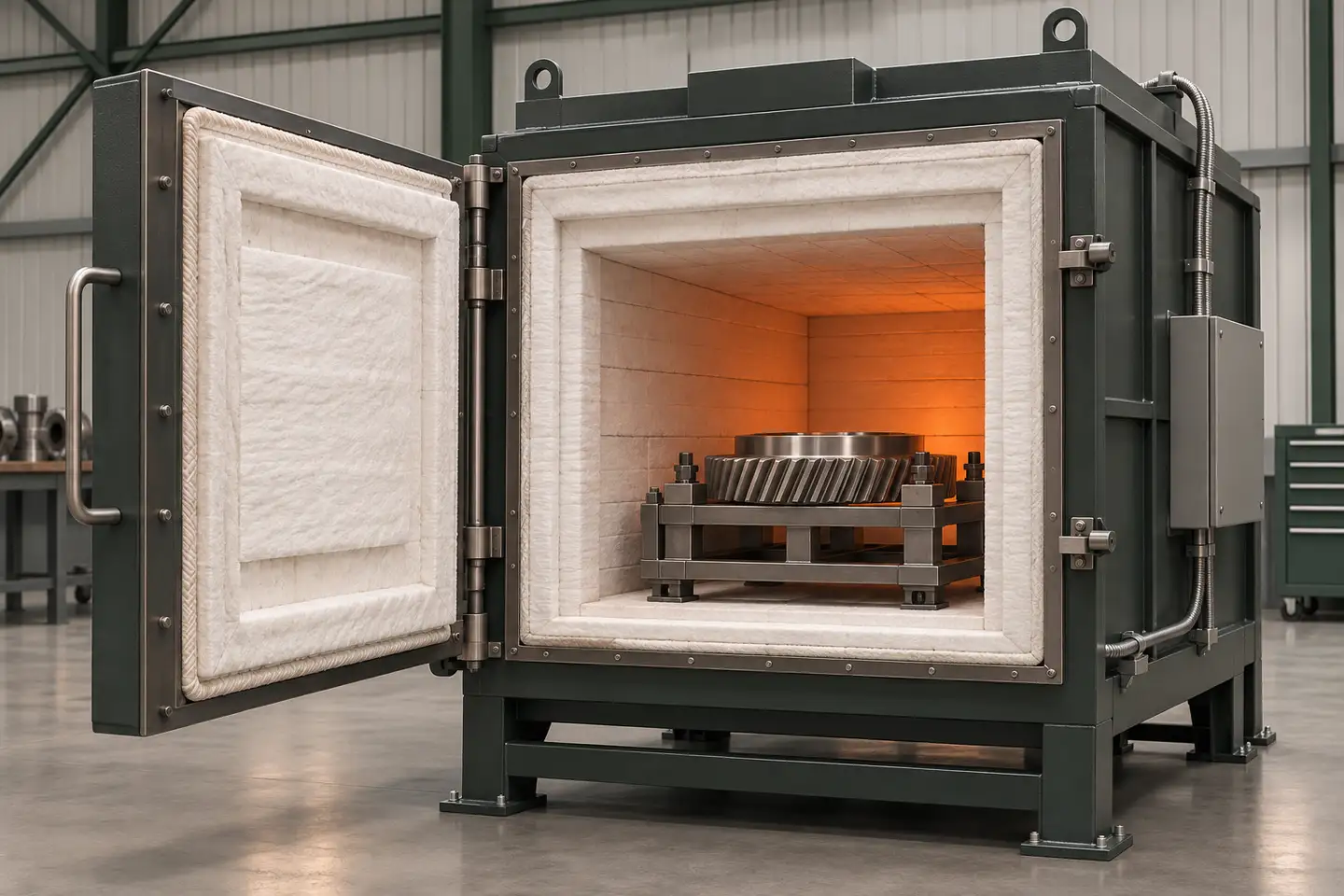
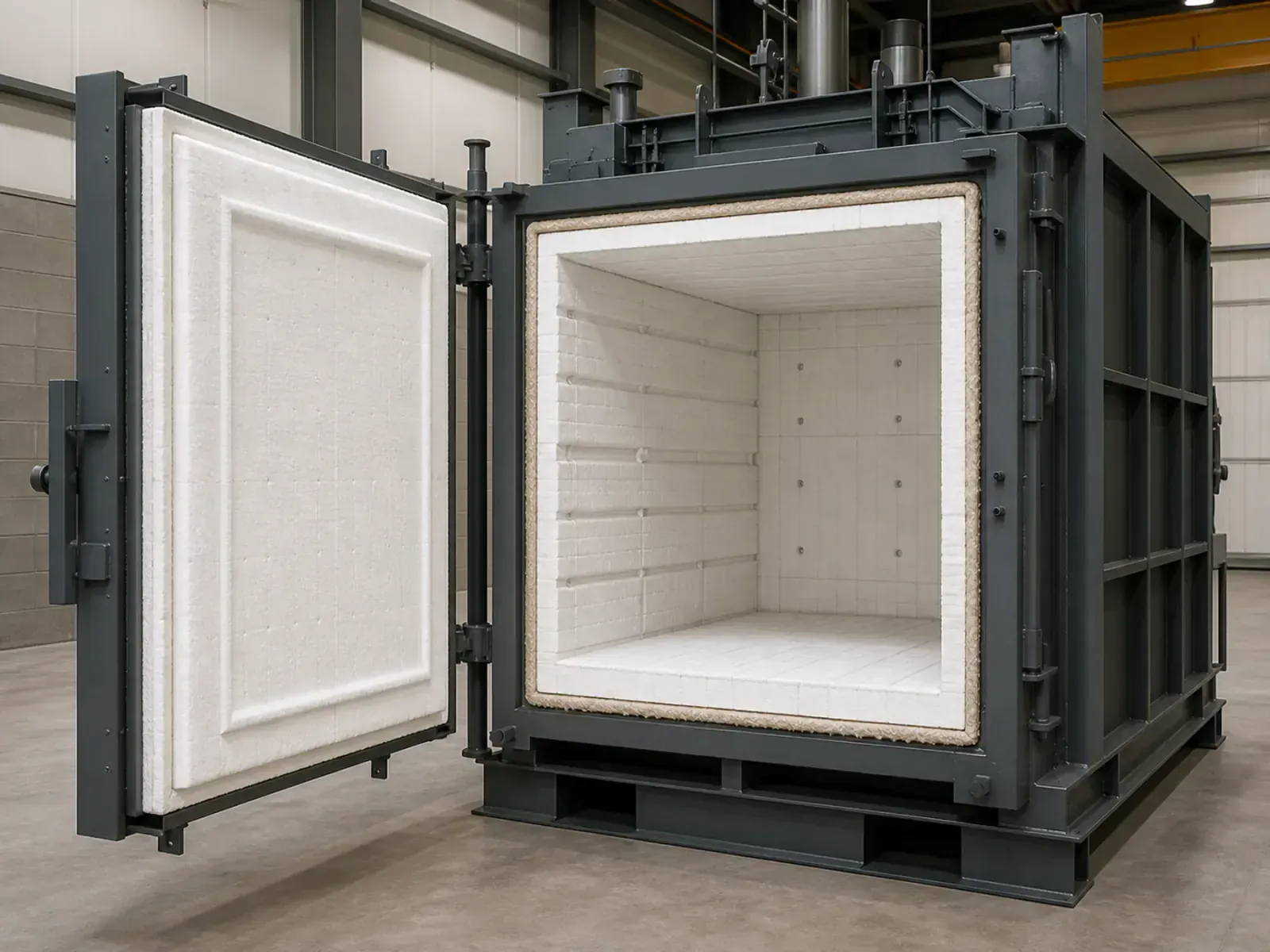
Industrial heat-treatment application illustration showing a fiber-lined electric furnace and a metal workpiece fixture

01Application

Industrial heat treatment

Ceramic fiber board, blanket, paper, modules and vacuum-formed parts for industrial furnace linings, hot-face components and thermal barriers.

5 formsfiber material formats
Hot faceor backup insulation
Customcut and formed parts

02Overview

Industrial heat-treatment equipment can combine rigid, flexible, thin, modular and formed insulation in one lining. Select each material by its function, temperature exposure, installation method, available thickness and mechanical loading.

03Equipment requirements

Select each ceramic fiber form for its position in the furnace.

Industrial furnaces rarely use one insulation form everywhere. Rigid boards support flat linings and machined parts, blankets conform to large surfaces, papers create thin thermal breaks, and vacuum-formed shapes solve hot-face geometry or local handling requirements.

Industrial batch furnace with a ceramic-fiber-lined hot chamber and insulated door
01

Rigid layers

Ceramic fiber board provides flat, self-supporting insulation and a machinable starting form.

  • Equipment panels and backup lining
  • Machined rings and profiles
  • Custom thickness and density
View details →
Ceramic fiber blanket roll and flexible sheet
02

Flexible layers

Ceramic fiber blanket follows curved shells, fills irregular spaces and builds multi-layer linings.

  • Roll and cut-piece supply
  • Layered backup insulation
  • Compression and joint planning
View details →
Thin ceramic fiber paper for separation and confined thermal interfaces
03

Thin separation

Ceramic fiber paper provides a thin, consistent thermal barrier, gasket or separation layer.

  • Thin equipment interfaces
  • Die-cut or shaped pieces
  • Smooth handling surface
View details →
Collection of custom vacuum-formed ceramic fiber blocks, sleeves and supports
04

Vacuum-formed parts

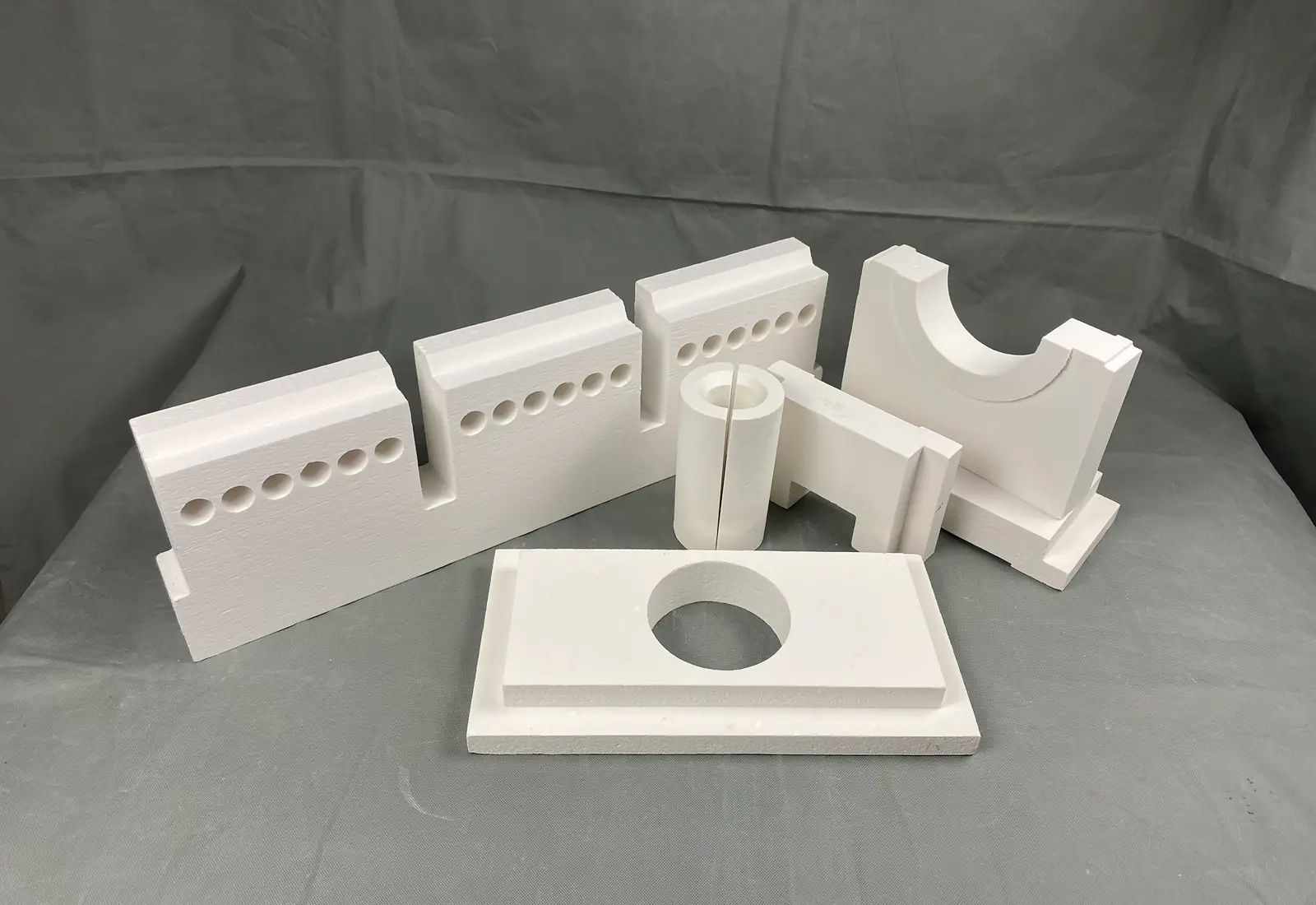
Vacuum forming and machining produce sleeves, ports, burner blocks and other one-piece shapes that cannot be built efficiently from flat board.

  • Ports, sleeves and burner blocks
  • Custom panels and chambers
  • Drawing-based production

04Selection table

Material-form selection table

Use the required function to choose a product family before selecting grade, density and dimensions.

Required functionLikely product formKey selection points
Flat, rigid insulationBoardLoad, thickness, machining and attachment
Curved or layered liningBlanketCompression, joints, anchors and shrink allowance
Thin thermal break or gasketPaperThickness, surface contact and cutting pattern
Bores, sleeves, ports or complex profilesVacuum-formed shapeDrawing, density, tolerances and penetrations

05Specification sequence

Specify the hot face, backup layers and furnace interfaces separately.

Each position can then receive the board, blanket, paper, module or formed part that fits its temperature, thickness and installation requirements.

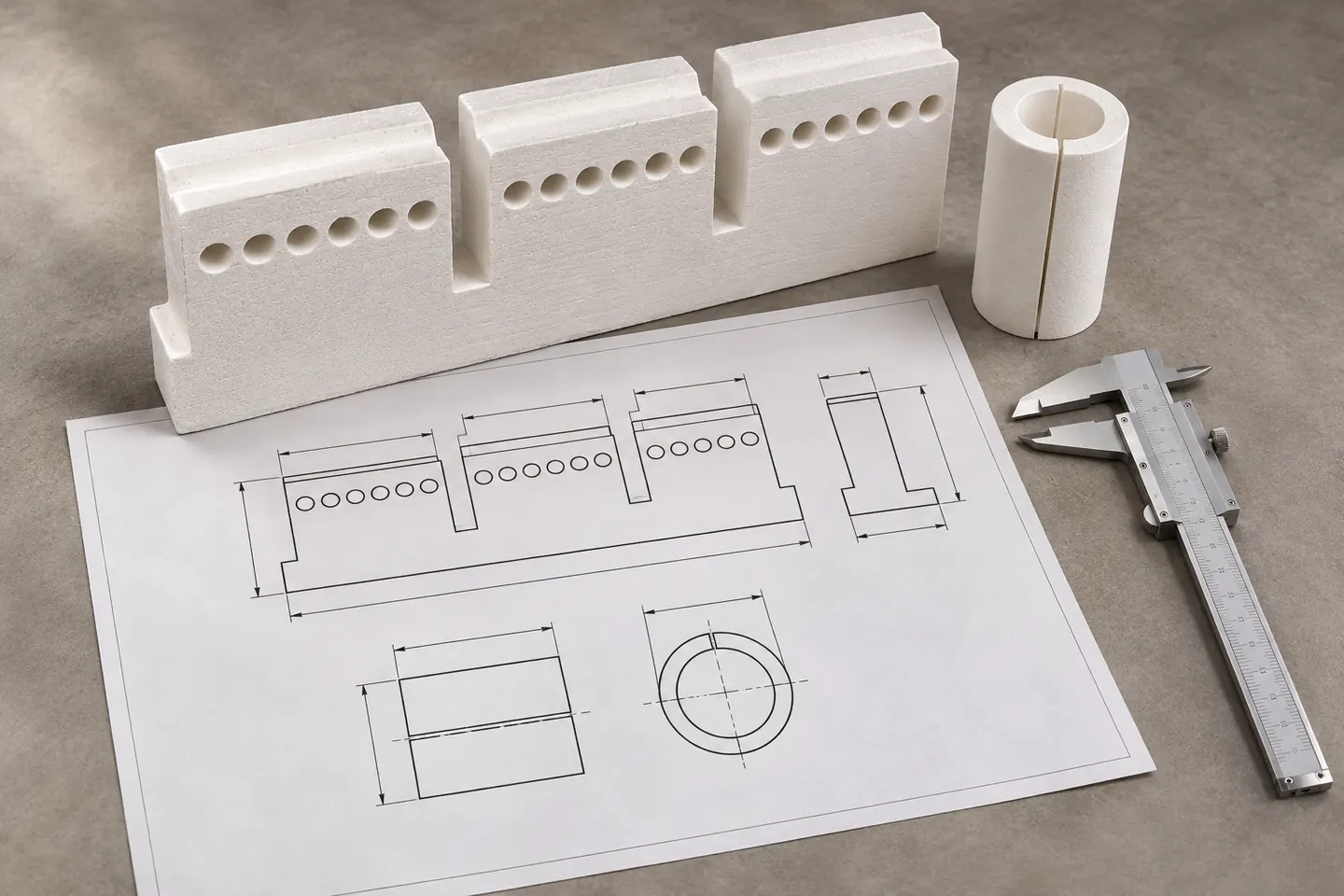
Component drawing, ceramic fiber parts and dimensional tools on a technical desk
  1. 01

    Segment the lining

    Identify hot face, backup layers, shell interface, joints and local details.

  2. 02

    Assign material forms

    Use rigid, flexible, thin or formed products according to each function.

  3. 03

    Select grade and density

    Confirm the temperature grade and handling or strength requirements.

  4. 04

    Provide finished dimensions

    Send panel sizes, cut lists, part drawings or installation quantities for quotation.

08Technical FAQ

Industrial furnace insulation questions.

01Can several ceramic fiber forms be supplied for one furnace?+

Yes. A project can combine boards, blankets, papers, modules and formed parts when each item is identified by grade, dimensions, quantity and installation function.

02Can density be customized?+

Yes. Standard density normally follows product form and temperature grade, while special density is available for defined handling, strength or thermal requirements.

03Can parts be cut or machined to drawings?+

Yes. Boards, papers and vacuum-formed shapes can be cut or machined when the drawing, tolerances and edge requirements are provided.

Heater covers and insulation for iron and steel equipment

Ceramic fiber components are used in heater covers, distributor heater covers and electric arc furnace covers, as well as heat-treatment furnace walls, roofs and doors. Rigid boards, folded or sewn blanket modules and flexible blankets serve different support, sealing and thermal-barrier functions. Supply may include an insulation part alone or a heated component with its element layout and electrical interfaces.

Equipment positionInformation needed for component selection
Heater or distributor coverCover drawing, openings, supports, lifting and maintenance clearances
Electric arc furnace coverExposed temperature, radiation, dust, gas movement and mechanical support
Heat-treatment furnace liningOperating cycle, atmosphere, lining thickness, anchors and heated-zone geometry

10Application inquiry

Discuss your industrial heat treatment application.

Tell us which part of the equipment you need supplied, its operating conditions, approximate dimensions and quantity. Our team can help with the next material or heating-system decision.