Compressed ceramic fiber module for kiln and sintering-equipment linings

01Application

Ceramic kilns and sintering equipment

Ceramic fiber linings, modules, chamber parts and heating assemblies for ceramic kilns, sintering equipment and thermal-process OEMs.

Firing cycletemperature and atmosphere inputs
Hot facelining and heating options
Customformed and machined parts

02Overview

Kilns may use modules for large hot faces, blanket for layered insulation, board for rigid barriers and vacuum-formed parts around ports or supports. Kiln geometry, cycle, atmosphere, loading method and maintenance access determine the product mix.

03Equipment requirements

Build the kiln lining and heating system around the cycle, hot face and maintenance plan.

Ceramic kilns and sintering equipment often use more than one insulation construction. Modules provide larger lining coverage, boards create rigid and machined surfaces, blankets fill flexible or backup positions, and formed components solve local ports, supports and furnace interfaces.

Ceramic kiln with folded ceramic-fiber module lining and an insulated door
01

Modular kiln linings

Folded ceramic-fiber modules support walls, roofs, doors, repairs and larger insulation areas where compression and anchoring must be planned.

  • Lining thickness and module layout
  • Anchor style and installation orientation
  • Repair and replacement planning
View details →
Flexible ceramic fiber blanket for layered kiln linings
02

Rigid and flexible insulation

Board and blanket can be used for rigid planes, backup layers, equipment wraps, joints and local thermal barriers.

  • Board for rigidity and machining
  • Blanket for curved or layered areas
  • Grade, thickness and density selection
View details →
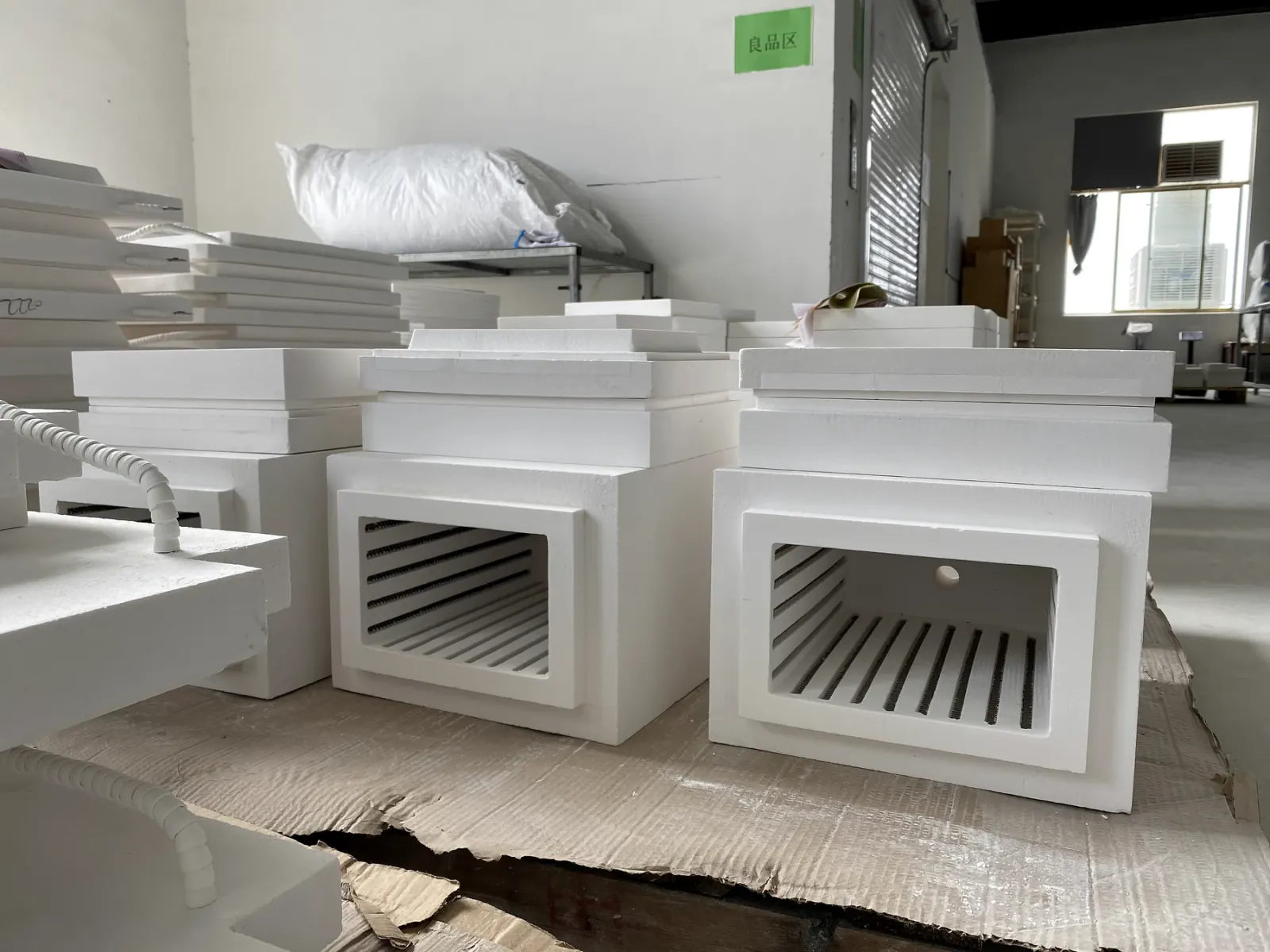
Ceramic fiber chamber components for compact kiln equipment
03

Chambers and heating assemblies

Small kilns and sintering equipment may use formed chambers or ceramic fiber heating panels with specified elements, sensors and enclosure interfaces.

  • Muffle and box furnace chambers
  • Embedded-element heating panels
  • Repeat production to the approved drawing
View details →

04Selection table

Ceramic-kiln insulation starting products

Use the kiln location and function to select a practical product family, then confirm the grade, dimensions, anchors and heating details.

Kiln position or requirementStarting productKey selection points
Wall, roof or large lining areaCeramic-fiber modulesLining thickness, anchors, compression, joints and maintenance
Rigid panel, baffle or backed hot-face partCeramic-fiber board or formed shapeLoad, machining, support and local exposure
Curved surface, wrap or gapCeramic-fiber blanketLayering, compression, attachment and service access
Compact kiln or sintering hot zoneFormed chamber or heating panelWorking volume, elements, sensors, outer envelope and electrical inputs

05Specification sequence

Connect the firing cycle, lining position and maintenance access.

A complete kiln inquiry defines the thermal cycle and equipment layout before material and element choices are finalized.

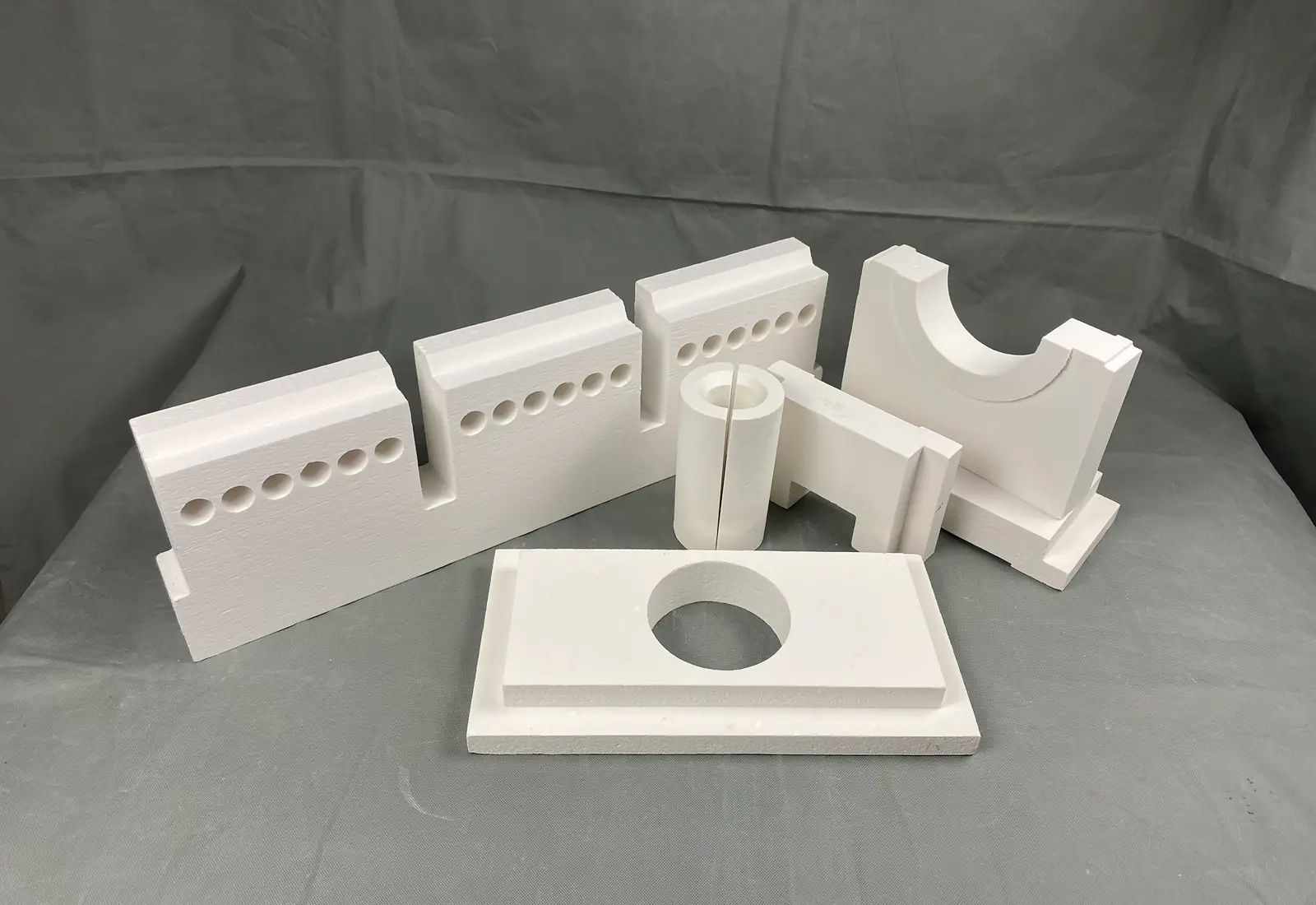
Custom ceramic fiber blocks, sleeves and supports for kiln interfaces
  1. 01

    Map the kiln

    Identify walls, roof, door, floor, ports, heating zones and the planned service path.

  2. 02

    State operating conditions

    Provide normal and peak temperature, atmosphere, firing cycle, loading method and expected cycling.

  3. 03

    Assign the construction

    Select modules, board, blanket, formed parts or a chamber based on the local function.

  4. 04

    Confirm the supplied parts

    Provide the drawing, quantities, anchors, elements, shell or backing requirements and required documents.

08Technical FAQ

Ceramic-kiln and sintering-equipment insulation questions.

01Can a kiln use modules, board and blanket in one lining?+

Yes. Different positions can need different functions. A project may combine modules for larger lining areas with board, blanket and formed components at interfaces, joints or local hot-face positions.

02Can heating elements be supplied with a compact kiln chamber?+

Yes. Order a bare formed chamber, a chamber with integrated heating elements, or a more complete cased heating assembly when the electrical and enclosure interfaces are specified.

03Can the lining be developed from an existing kiln?+

Yes. Send a drawing, measured sketch, photographs and the operating conditions for a replacement or retrofit project.

Insulation components for different kiln constructions

Shuttle kilns, roller-hearth kilns, mesh-belt kilns, bell-type kilns and large laboratory furnaces have different lining supports, loading patterns and thermal cycles. Ceramic fiber boards provide rigid flat or machined insulation; sewn modules provide anchored wall, roof and door sections. Select the product construction from the normal and peak temperature, process atmosphere, mechanical support and available lining thickness rather than kiln name alone.

Kiln requirementComponent design focus
Walls and roofsBoard or module arrangement, anchor layout and installed thickness
Doors and moving coversJoint sealing, support, abrasion and repeated thermal cycling
Burner, tube and inspection openingsVacuum-formed or machined shapes matched to the adjoining lining

10Application inquiry

Discuss your ceramic kilns and sintering equipment application.

Tell us which part of the equipment you need supplied, its operating conditions, approximate dimensions and quantity. Our team can help with the next material or heating-system decision.