
High-purity MoSi₂ elements
Openings, supports and cold-end terminals are positioned for the selected molybdenum disilicide elements. The loading platform, tray or saggar must clear both the elements and the temperature sensor.
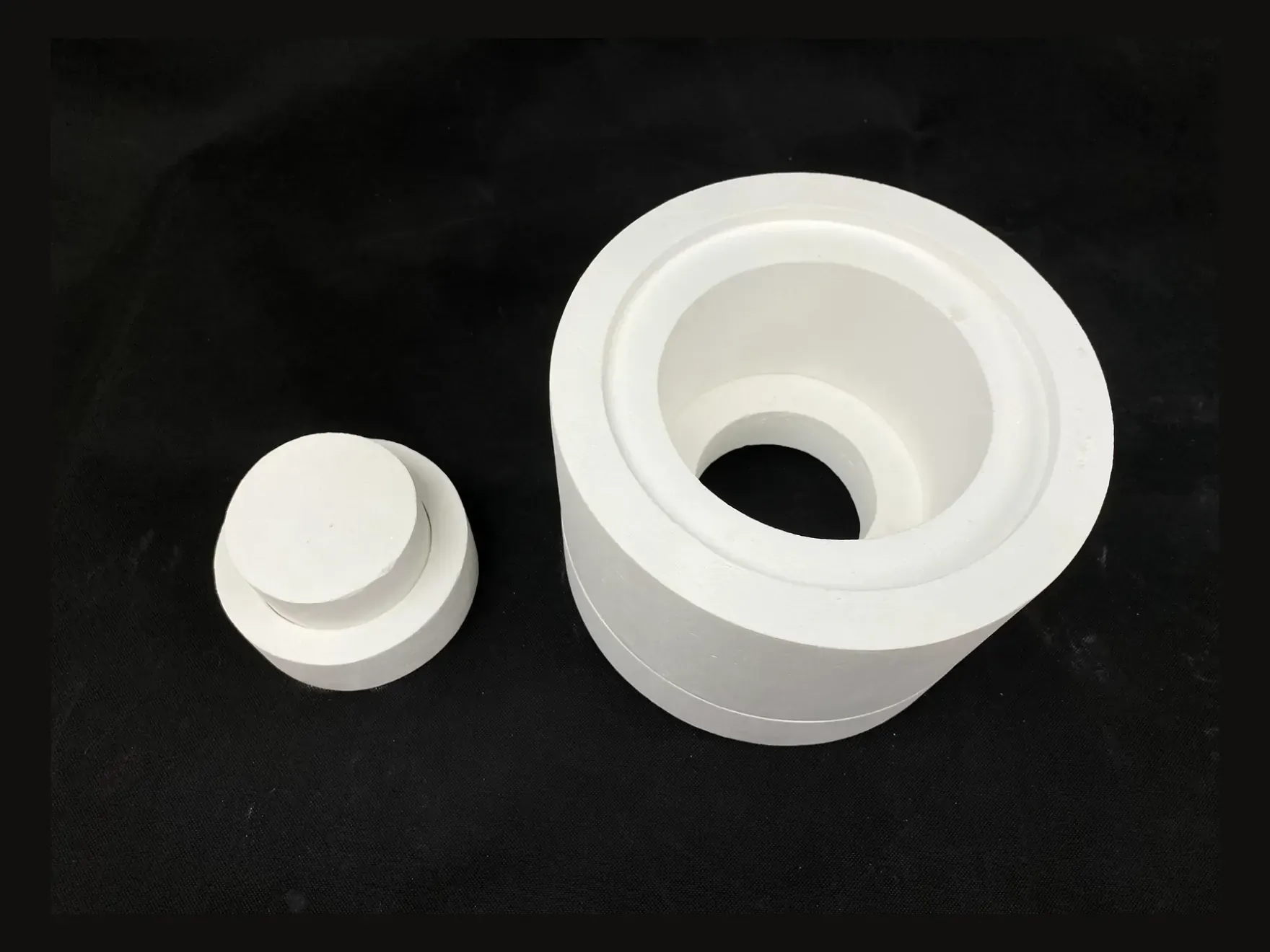
011600 grade · long-term operation up to 1550°C
Custom zirconia sintering furnace chambers with high-purity MoSi2 or double-spiral SiC heating elements, available in round and square formats.
02Overview
A zirconia sintering chamber must accommodate the 1600-grade insulation body, heating elements, load or saggar clearance, thermocouple and maintenance clearances within the furnace envelope. For up to 1550°C long-term operation, specify the complete sintering curve, cycle frequency, atmosphere, usable chamber dimensions, high-purity MoSi2 or double-spiral SiC element preference, voltage, power, circuit grouping and element-replacement path. Round and square chambers are both manufactured to the working-zone and equipment-interface drawing.
03Product views


+Zirconia chamber heating
Round and square chambers are available for long-term operation up to 1550°C. The element system, usable load space and maintenance access are developed as one chamber layout.
Openings, supports and cold-end terminals are positioned for the selected molybdenum disilicide elements. The loading platform, tray or saggar must clear both the elements and the temperature sensor.
The spiral-cut heating section and terminal end require the corresponding chamber openings and installation clearances. Element geometry and electrical ratings are matched to the furnace supply.
The 1200°C resistance-wire porcelain chamber is a separate product for porcelain firing, not zirconia sintering.
View dental porcelain heating muffles ↗05Selection guide
For a 1600-grade zirconia sintering chamber, the firing curve and working zone must be defined with the high-purity MoSi2 or double-spiral SiC system. Element material, electrical circuits, sensor position and replacement path must all fit within the chamber and furnace envelope.
Provide normal and peak temperature, ramp and hold stages, cycle frequency, furnace atmosphere, typical load, tray or saggar dimensions and required clearance. State whether the chamber will operate continuously at temperatures up to 1550°C.
State element preference, voltage, power, phase, controller circuits, thermocouple arrangement, terminal limits and the path available for element replacement. The final layout must satisfy both the electrical design and chamber clearances.
Define the round diameter or square width, usable height, loading opening, outer dimensions, insulation wall, lid and base interfaces, lead clearance, locating features and maintenance access.
06Custom engineering
For operation up to 1550°C, provide the full sintering curve, atmosphere, load or saggar clearance, supply voltage and available installation space. We use those inputs to size the 1600-grade chamber and position the MoSi2 or double-spiral SiC elements, sensor, terminals and replacement access.
07Application fit
1600-grade chamber assembly specified for the sintering curve, load clearance and long-term operation up to 1550°C.
Application details ↗Concentric working-zone body with element, thermocouple, terminal and service clearances resolved around the load.
Application details ↗Flat-wall body matched to a rectangular hot zone, casing, loading path, lid or base and replacement interfaces.
Application details ↗The 1600-grade chamber is designed for long-term operation up to 1550°C.
Choose high-purity MoSi2 or double-spiral SiC elements according to the furnace design.
Body shape follows the working zone, load path and equipment interfaces.
08Product FAQ
Yes. The 1600-grade zirconia chamber can be specified for up to 1550°C long-term operation with the matching element system and furnace design.
Both are available high-temperature options. Provide the firing curve, atmosphere, chamber dimensions, load clearance, supply voltage, power, circuit grouping, thermocouple position, terminal limits and replacement access so the complete element arrangement can be evaluated.
Yes. Round chambers are preferred, and square chambers are available. Select the shape from the working zone, loading path, casing, lid or base interface and the clearances required for elements and maintenance.
Yes. A drawing or reference sample can establish geometry, but the temperature cycle, element preference, electrical data and known service issues should also be supplied.
09Related information
10Product quotation
Send the product dimensions, operating temperature and quantity. For a heated assembly, add the available voltage and power; a drawing or sample photo can help define the rest.